
The Caviar
A selection from the world regions of sturgeon caviar.
01
Origin and sustainability
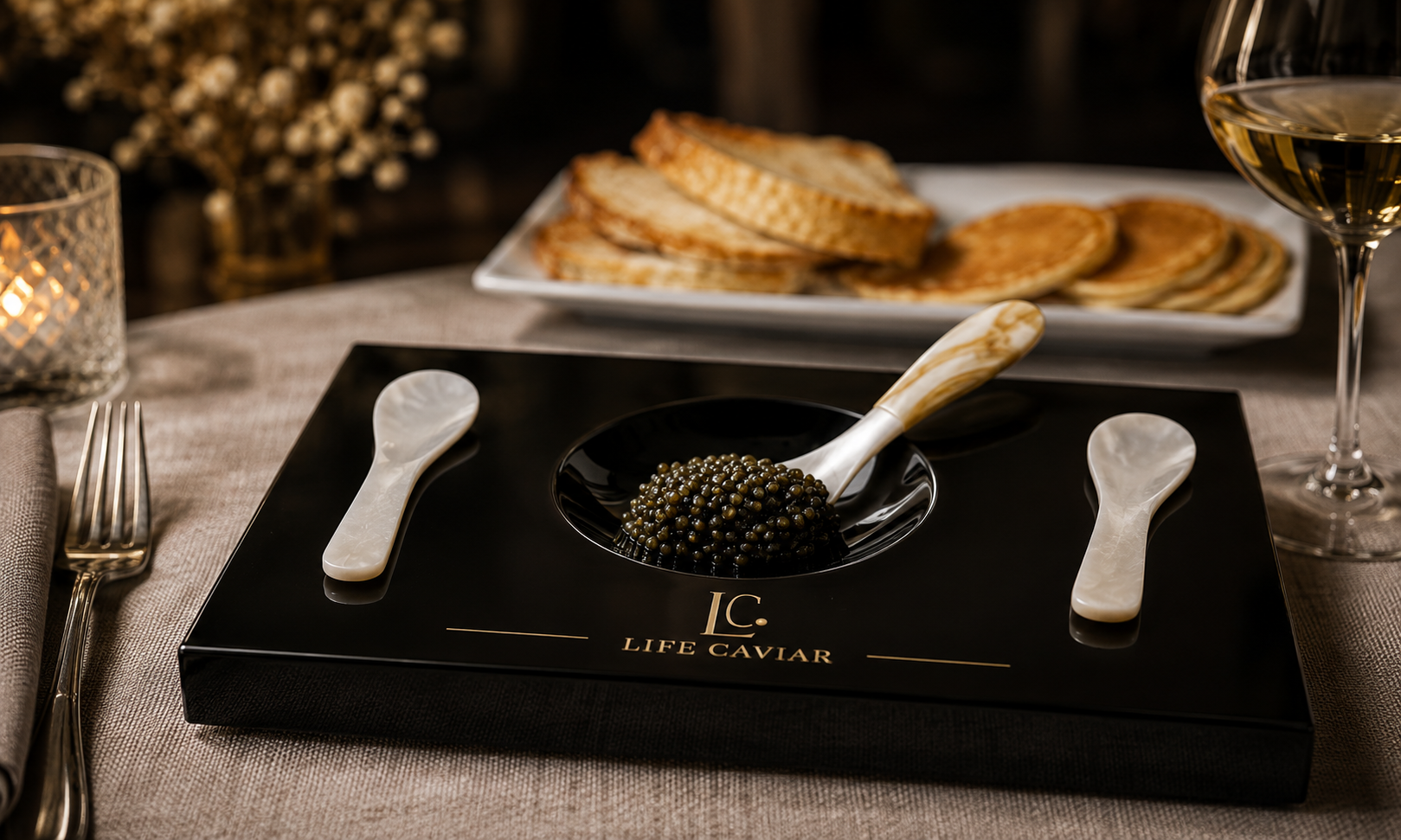
The development of aquaculture production over recent decades has permanently changed the standards of the caviar world. Today, the finest caviar does not come from the wild, but from high-technology farms that recreate the natural living conditions of sturgeon with scientific precision and responsibility toward the species.
Sturgeon are among the most demanding species in aquaculture. They require precisely controlled conditions for life, feeding and reproduction.
Our selection includes premium sturgeon caviar from carefully chosen aquaculture farms in Europe and Asia, regions with long-standing expertise in sustainable farming and production according to international standards.
A special accent in the LC Life Caviar selection is caviar from high-technology farms in ecologically clean mountain regions of Asia. Some of the most advanced sturgeon farms in the world are located there.
02
A palette of sturgeon species
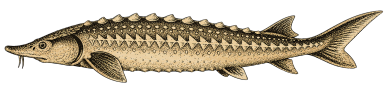
Beluga Huso huso
The king of caviar. The largest, most delicate and buttery, with magnificent grey nuances.
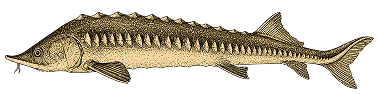
Kaluga Huso dauricus
A delicate texture and pure taste, often compared with Beluga for its large grains.
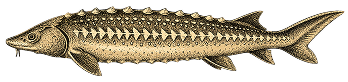
Russian sturgeon Acipenser gueldenstaedtii
The source of legendary Osetra, with a characteristic nutty finish and golden reflections.
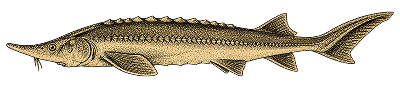
Siberian sturgeon Acipenser baerii
Fine, balanced caviar with a clean marine profile and elegant minerality.
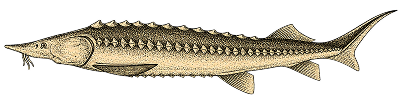
Amur sturgeon Acipenser schrenckii
Crisp golden-brown grains with a rich and balanced taste.
Sturgeon can live for more than 100 years. Beluga reaches maturity only around 20. The caviar you hold in your hands is the result of decades of patience.
Enter the LC Life Caviar Journal03
Traceability and trust
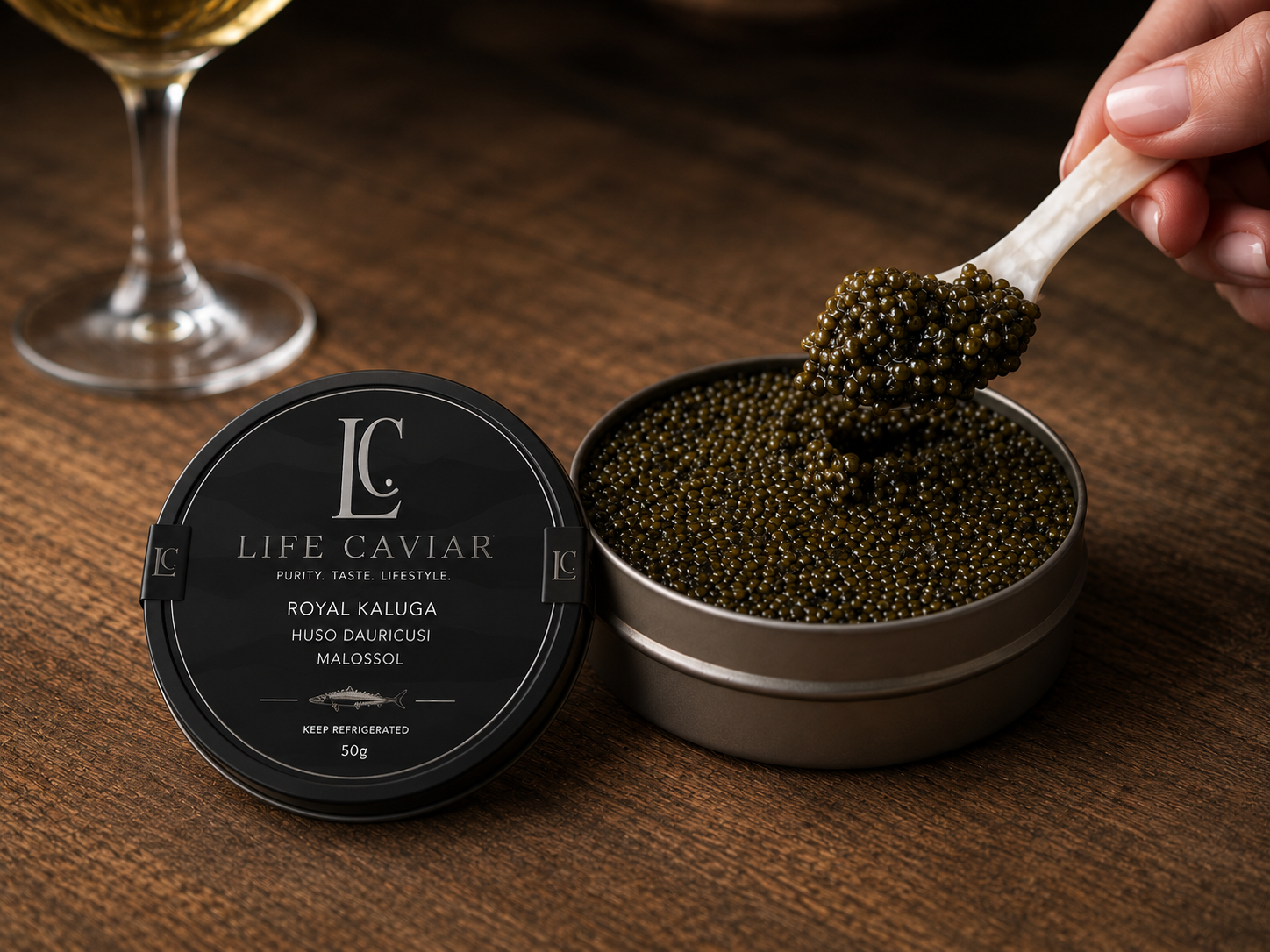
Every tin of LC Life Caviar carries a batch number and full traceability from the certified farm to your table.
Our products are accompanied by a CITES certificate, veterinary certificates of origin and food safety certificates.
We work only with licensed producers who apply the traditional Malossol method: minimal salt, maximum taste.
Our philosophy
For us, caviar is much more than a delicacy. It is a culture of taste, respect for nature and an expression of a conscious attitude toward quality of life.
Every tin of LC Life Caviar is an invitation to feel the energy of living pearls.
Purity. Taste. Lifestyle.
Explore the collections05
History of caviar types
IMPERIAL BAERII Acipenser baerii × Acipenser schrenckii
The two parents
Acipenser baerii - the Siberian sturgeon - inhabits the rivers of Siberia from the Ob to the Lena. Resilient, fast-maturing, with a clean and buttery taste. The foundation of the European caviar industry.
Acipenser schrenckii - the Amur sturgeon - bears the name of the Russian-German naturalist Leopold von Schrenck, who explored the Far East in the 19th century. (Regalis Foods) It inhabits the Amur River - the border river between Russia and China - and can reach 3 meters in length and 190 kg in weight, living more than 60 years.
Why it is rare
Baerii and Schrenckii are a rarity in the world of sturgeon breeding. Only with the development of modern diagnostics have producers been able to control and guarantee the purity of IMPERIAL BAERII.
Baerii gives the intense dark color and clean taste, while Schrenckii provides the luxurious texture and grain size.
The result is a rich and complex flavor profile with floral notes from Baerii, combined with the large, dense grain of Schrenckii.
View Imperial BaeriiOSSETRA Acipenser gueldenstaedtii · Russian sturgeon
The word Ossetra is a transcription of the Russian “osetra”, which literally means “sturgeon caviar”. Its spelling varies - Ossetra, Osetra, Oscietra, Osietra - depending on the country and market, but the same species stands behind all these names.
An ancient species, a royal table
Acipenser gueldenstaedtii is an ancient fish native to the Caspian Sea, the Black Sea and their river systems, valued for centuries for the rich, nutty and elegant taste of its caviar.
During the Russian Empire, Ossetra caviar gained exceptional renown - served at the table of tsars and aristocracy. (ResearchGate) In the 19th century Russia began exporting caviar to Europe, with Ossetra among the most sought-after varieties, quickly earning recognition for its superior quality.
The rise and fall of wild fishing
At the peak of commercial fishing in the Caspian Sea - 1977 - A. gueldenstaedtii was the most harvested species, making up 79% of total sturgeon catch, or more than 21,000 tons. Decades of overfishing, pollution and habitat destruction caused populations to collapse catastrophically. By the end of the 20th century, wild populations were under severe threat and the species was declared critically endangered.
Caviar today
The continuous decline in natural populations and high market demand accelerated sturgeon aquaculture - today Russia, Iran, EU countries, China and the USA are among the leading producers.
Ossetra is the second most sought-after caviar in the world after Beluga. Its color ranges from dark brown to golden - lighter grains are rarer, richer in taste and come from older fish.
View OssetraIMPERIAL Huso dauricus (Kaluga) × Acipenser schrenckii (Amur Sturgeon)
The giant of the Amur
Huso dauricus - Kaluga - is known as “the giant of the Amur”. One of the largest freshwater predators in the world, it can reach 5.6 meters in length and nearly 1,000 kg in weight. Because of its size and the quality of its caviar, it is called “river Beluga” - and indeed belongs to the same Huso genus as the legendary Beluga. (Caviar Star)
The tradition of caviar production along the Amur spans centuries. The river is home to two of the world’s most valuable sturgeon - Kaluga and the Amur sturgeon - and has given rise to generations of caviar masters.
Commercial fishing began at the end of the 19th century after Russian expansion into the Far East. By 1881, the official Kaluga catch reached 595 tons, and the peak came in 1891 - more than 1,200 tons of sturgeon sent to European and Asian markets.
Critically endangered, but not forgotten
The ban on fishing Kaluga and Amur sturgeon was introduced as early as 1958 and officially remains in force today. Despite constant anti-poaching patrols, illegal fishing continues. In Russia, fishing Kaluga anywhere along the Amur is a heavily punishable crime. Today the species is listed in the IUCN Red List as critically endangered.
The birth of IMPERIAL
The crossing between Kaluga (Huso dauricus) and Amur sturgeon (Acipenser schrenckii) is a naturally occurring process, later mastered by sustainable aquaculture. The result is exceptional caviar that inherits the best of both - the large, buttery grain of Kaluga and the floral notes of Amur sturgeon.
The taste
Imperial caviar offers a rich, buttery taste with notes of hazelnut and light salinity - a profile directly compared with Beluga, but with more pronounced character and more accessible sustainability.
View ImperialROYAL KALUGA Huso dauricus · River Beluga
The giant guarded by the river
Huso dauricus - Kaluga - is one of the largest freshwater predators in the world. Native to the Amur River, which runs along the border between China and the Russian Far East, it can reach 5.6 meters in length and more than 1,000 kg in weight.
Early explorers and fishermen called it “the Amur equivalent of Beluga” - a legendary “big fish” in local stories, capable of tearing nets and requiring several people to pull it out.
The Huso genus - the blood of kings
Kaluga is not merely a large fish. It belongs to the Huso genus - the same genus as the legendary Caspian Beluga (Huso huso). The two are sister species, separated by a continent but united by the same genetic origin and incomparable gastronomic value.
For centuries, sturgeon have been a symbol of luxury and status across Eurasia. Kaluga holds that role along the trade routes of the Amur and in modern caviar markets.
Commercial Kaluga fishing reached its peak in 1891 - more than 1,200 tons of sturgeon annually, exported to European and Asian markets. Decades of overfishing and poaching caused populations to collapse catastrophically. The fishing ban was introduced as early as 1958 and officially remains in force today. The species is listed as critically endangered by the IUCN.
The modern heir to Beluga
Today Royal Kaluga caviar is harvested only from farms with controlled conditions - full compliance with international CITES regulations and guaranteed traceability from hatchery to tin.
The taste is rich and creamy - with notes of fresh butter, sweet cream and delicate marine salinity. Unlike sharper varieties, Kaluga offers a rounded, almost champagne-like elegance that lingers on the palate without bitterness.
Many sommeliers and chefs consider high-class Kaluga caviar indistinguishable from mid-class Beluga in blind tastings.
View Royal KalugaROYAL BELUGA Huso huso · Beluga
200 million years of history
Beluga (Huso huso) is one of the oldest fish species on the planet - dating back more than 200 million years, when dinosaurs still inhabited the earth. Native to the Caspian and Black Seas, it can reach 6 meters in length and more than 1,000 kg in weight - a true giant that has survived from prehistoric times to the present day.
The Persians were among the first to consume caviar from the Caspian Sea. The word caviar comes from the Persian khav-yar - “cake of strength” - because they believed sturgeon roe had healing properties and strengthened the body. (Imperia Caviar)
At first, sturgeon was caught for its meat. Only when fishermen noticed the enormous quantity of roe in female specimens did they begin to consume it.
By the 9th century, Russian tsars and aristocracy had already embraced Beluga caviar as the ultimate luxury. Fishermen along the Volga and Caspian supplied sturgeon caviar directly to royal courts. Caviar became a diplomatic gift between Russian emperors and European monarchs.
In Imperial Russia, Beluga was served at special celebrations and diplomatic receptions, while the Orthodox Church made it an indispensable element of the table - permitted even during fasting.
By the 19th century, Beluga caviar had reached European courts, royal banquets and luxury restaurants in Paris, London and New York. Hollywood stars, diplomats and billionaires adopted it as a symbol of sophistication.
King Edward VII of England and Tsar Nicholas II of Russia are among the most famous admirers of Beluga caviar - their personal preference further cemented its elite status around the world.
Today Beluga caviar is the most expensive variety in the world - market prices range between 7,000 and 22,000 dollars per kilogram. In 2005 the USA banned imports of Beluga caviar from the Caspian and Black Seas, and in 2006 CITES stopped all trade in wild sturgeon from the region.
Today the only legal way to access Beluga caviar is through specialized farms - mainly in Europe and the Middle East - where sturgeon are raised through long-term sustainable production programs.
The taste is buttery and creamy, with elegant, delicate salinity and an almost pearly finish on the palate - a profile unmatched by any other type of caviar in the history of gastronomy.
View Royal BelugaROYAL BAERII CAVIAR Acipenser baerii · Siberian sturgeon
Royal Baerii Caviar comes from the Siberian sturgeon - Acipenser baerii, one of the most valued sturgeon species in the world. The species is naturally distributed in the great rivers of Siberia - the Ob, Yenisei and Lena systems - where for centuries it was a source of high-quality black caviar.
After the serious decline of wild populations in the 20th century, international trade in wild caviar became heavily restricted. Today almost all Royal Baerii Caviar comes from modern certified aquaculture farms that provide sustainable production, species protection and full traceability of origin.
Siberian sturgeon is preferred by leading producers because it reaches sexual maturity faster than many other sturgeon species, and its caviar is distinguished by consistent taste qualities. The grains are medium-sized, ranging from dark grey to anthracite black, with a delicate natural sheen.
Taste character
- fine, clean and balanced taste;
- delicate buttery notes;
- a light nutty finish;
- a long and elegant aftertaste without excessive salinity.
The name Royal is used for a highest-class selection, where caviars are chosen for excellent grain size, even color, perfect texture and an exceptional flavor profile.
For connoisseurs, Royal Baerii offers an ideal balance between the tradition of black caviar and modern sustainable production, becoming one of the most sought-after categories in global haute gastronomy.
View Royal BaeriiRESERVE BELUGA Huso huso · Beluga
The story of Reserve Beluga begins with Huso huso - the most majestic and largest sturgeon in the world. For centuries it inhabited the waters of the Caspian and Black Seas, turning its caviar into a symbol of royal splendor.
Beluga is an ancient species with a history stretching back more than 200 million years. It reaches sexual maturity only after 14-20 years or more - much later than other sturgeon species. This long maturation, combined with the exceptional rarity of the species, makes Beluga caviar the most prestigious and valuable black caviar in the world.
Today wild Beluga populations are critically endangered and international trade in wild caviar is strictly regulated. Authentic Reserve Beluga is therefore produced in certified aquaculture farms that meet the highest international standards for sustainability, traceability and quality.
The caviar impresses with large, silky-soft pearls in shades from light grey to dark grey. The taste is exceptionally fine and creamy, with delicate buttery notes, elegant minerality and a long, noble aftertaste - the distinctive signature of true Beluga.
Reserve Beluga is the choice of those who understand luxury not as display, but as heritage, tradition and a culture of taste. Life Caviar turns this heritage into an experience worthy of the most special moments.
View Reserve Beluga