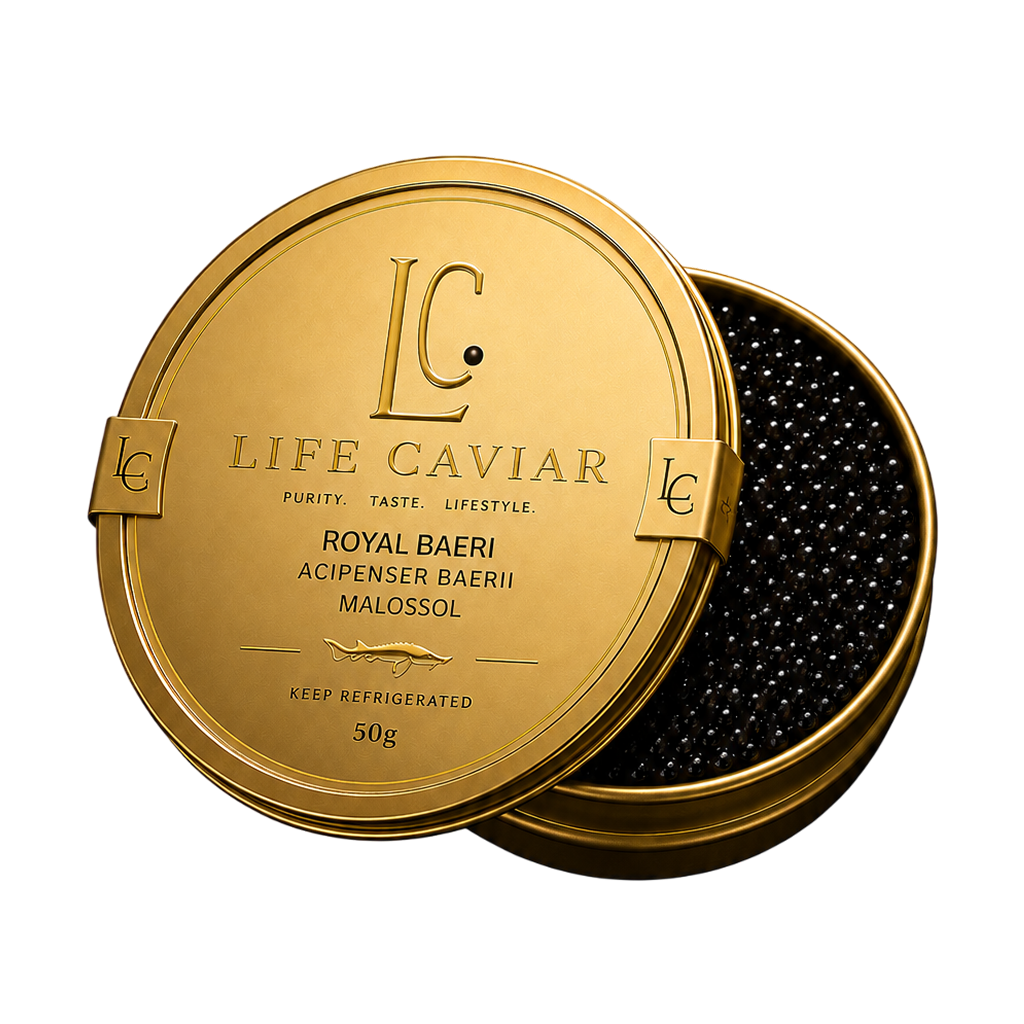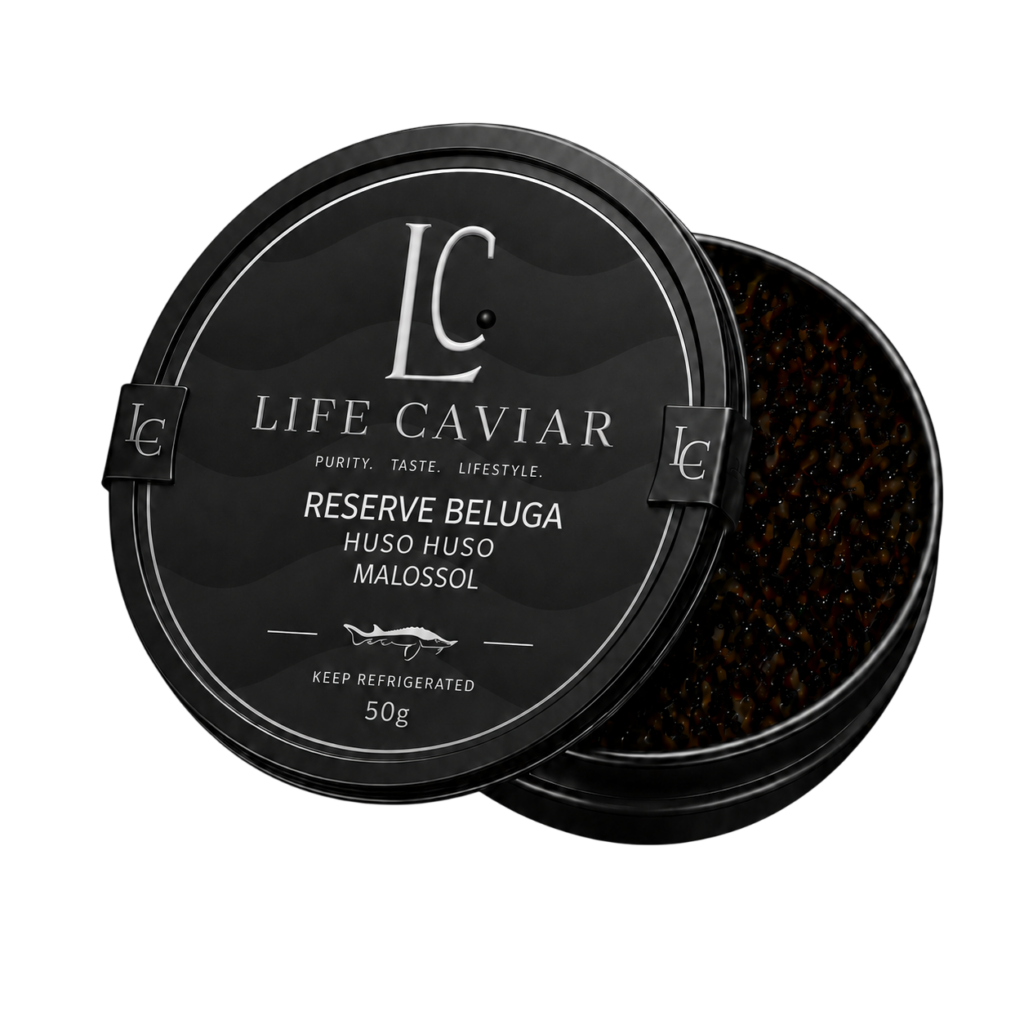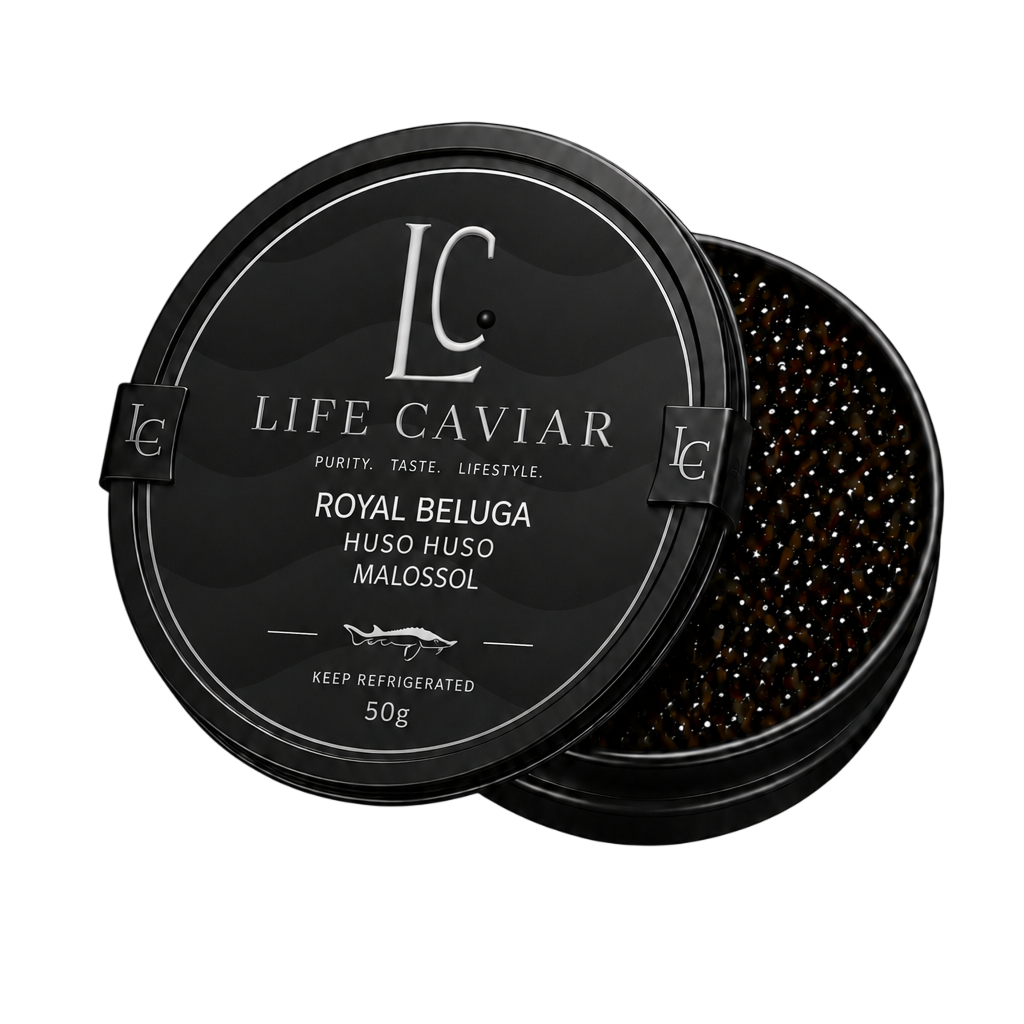
IMPERIAL CAVIAR/ RIVER BELUGA
Shelf life: up to 6 months unopened and 1-2 days after opening, refrigerated.
Storage: keep between -2 C and +4 C in the coldest part of the refrigerator. Storage in the transport box with cooling packs is possible only while the packs remain frozen.
Temperature-controlled delivery: every product travels in a specially designed insulated thermal box with professional gel cooling packs, maintaining -2 C to +4 C for up to 48 hours.
Freshness guaranteed to your door.
Opening: carefully slide a flat spoon or dedicated caviar opener under the edge of the lid. Avoid sharp knives. Open immediately before serving.
Serving: serve well chilled over crushed ice. Use only a mother-of-pearl, horn, bone or glass spoon. Metal utensils can disturb the delicate fats and alter the flavor profile.
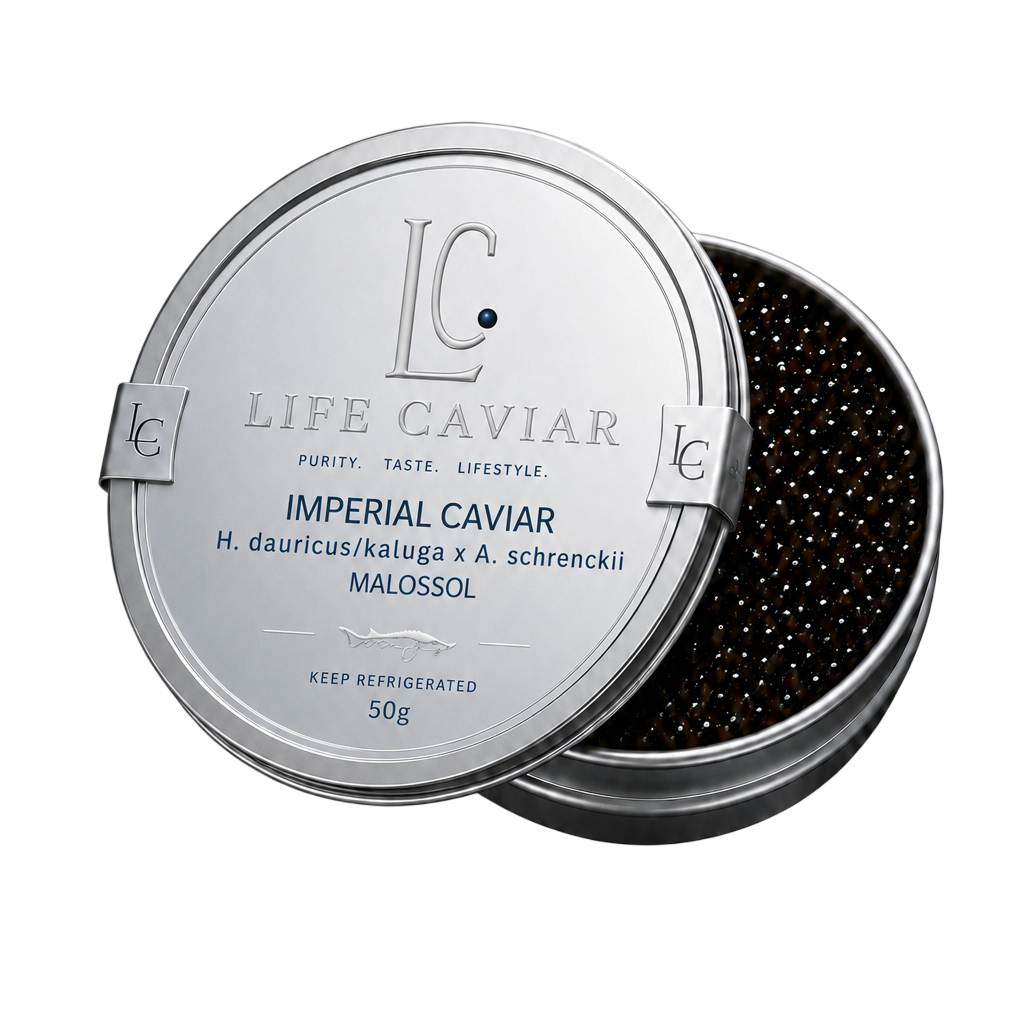
The caviar images on our website are intended for illustrative purposes only. As caviar is a natural product, variations in color and pearl size are possible. If you have any uncertainty or need information about your caviar tin, please contact us. We are always available to answer. contact
About the product
Recommended serving quantity
| Occasion | Quantity per person |
|---|---|
| Tasting / aperitif | 10 g - 15 g |
| Starter | 20 - 30 g |
| Main experience | 50 g |
| Gift / special occasion | 100 g |
Perfect accompaniment
Pairs with:
- Drinks: Prestigious champagne (Brut or Vintage), chilled white wine of the Chardonnay variety (with a delicate oak accent) or premium vodka.
- Food: Warm blini, high quality crème fraiche, lightly baked brioche or toasted bread with unsalted farm butter.
- What to avoid: Strong spices, onions, lemon and sour products, they would muffle the rich oil shades of this special caviar.
THE HISTORY OF IMPERIAL
Huso dauricus (Kaluga) × Acipenser schrenckii (Amur Sturgeon)
The giant of Amur
Huso dauricus - Kaluga - is known as the "giant of the Amur". One of the largest freshwater predators in the world, reaching up to 5.6 meters in length and nearly 1,000 kg in weight. Because of the size and quality of its caviar, it is called the "River Beluga" - and indeed belongs to the same genus Huso, from which the legendary Beluga originates. (Caviar Star)
The tradition of caviar production along the Amur River spans centuries. The river is home to two of the world's most valuable sturgeon—the Kaluga and the Amur sturgeon—and has spawned generations of spawning masters.
Commercial hunting began in the late 19th century following Russian expansion into the Far East. By 1881, the official Kaluga catch reached 595 tons, and the peak occurred in 1891 — over 1,200 tons of sturgeon shipped to European and Asian markets.
Critically endangered but not forgotten
The ban on catching Kaluga and Amur sturgeon was introduced back in 1958 and is officially in force to this day. Despite constant anti-poaching patrols, illegal hunting continues. In Russia, fishing for Kaluga anywhere on the Amur is a serious criminal offense. Today the species is listed in the IUCN Red List as Critically Endangered.
The birth of IMPERIAL
Mating between Kaluga (Huso dauricus) and Amur sturgeon (Acipenser schrenckii) is a naturally occurring process, subsequently mastered by sustainable aquaculture. The result is an exceptional caviar that inherits the best - the large, oily grain of the Kaluga and the floral notes of the Amur sturgeon.
The taste
Imperial caviar offers a rich, buttery flavor with hints of hazelnut and a slight saltiness—a profile that compares directly to Beluga, but with more pronounced character and more accessible persistence.
Product information
| Name | Sturgeon caviar from Kaluga (Huso dauricus) and Amur sturgeon (A. schrenckii) |
|---|---|
| Composition | Sturgeon caviar, salt (up to 3%). |
| Description | Golden amber to light bronze with olive nuances. Remarkably firm membrane with a clean “pop” effect. Dense, exceptionally creamy and buttery taste with a sweet finish. |
| Energy | 1118 kJ / 267 kcal |
|---|---|
| Fat | 18.0 g |
| of which saturates | 4.2 g |
| Carbohydrates | 2.0 g |
| of which sugars | 0.1 g |
| Protein | 25.0 g |
| Salt | up to 3.0 g |